The gearheads who keep the games moving

Expert adaptive equipment technicians from around the world are the unsung heroes of the Paralympics.
For over 30 years, the Paralympic Games have provided a centralized equipment repair station where any athlete can turn for last minute adjustments or desperate fixes to their tires, sleds, and skis. The program traces back to the 1988 games in Seoul, where four prosthetic workers began fixing equipment for free. What started as a single tent in South Korea has developed into a core part of Paralympic infrastructure and a lucrative corporate partnership.
Universal repair
At the 2026 Winter Paralympics, a team of 86 skilled professionals completed 495 repairs across three workshops in Milan, Cortina d’Ampezzo, and Predazzo. The technicians primarily worked on wheelchairs (42% of all repairs), but also handled artificial limbs (14%), and custom orthotics (11%). All repair services were provided for free and were offered to everyone regardless of their national federation or equipment manufacturer.
This is a stark contrast to the Olympics, where national teams typically travel with their own equipment managers and tools. At the Paralympics, equipment is viewed as an extension of an athlete’s body, so repairs are centralized and guaranteed for all. At the Olympics, equipment is a performance tool that teams are expected to manage and maintain themselves.
Prosthetic pioneers
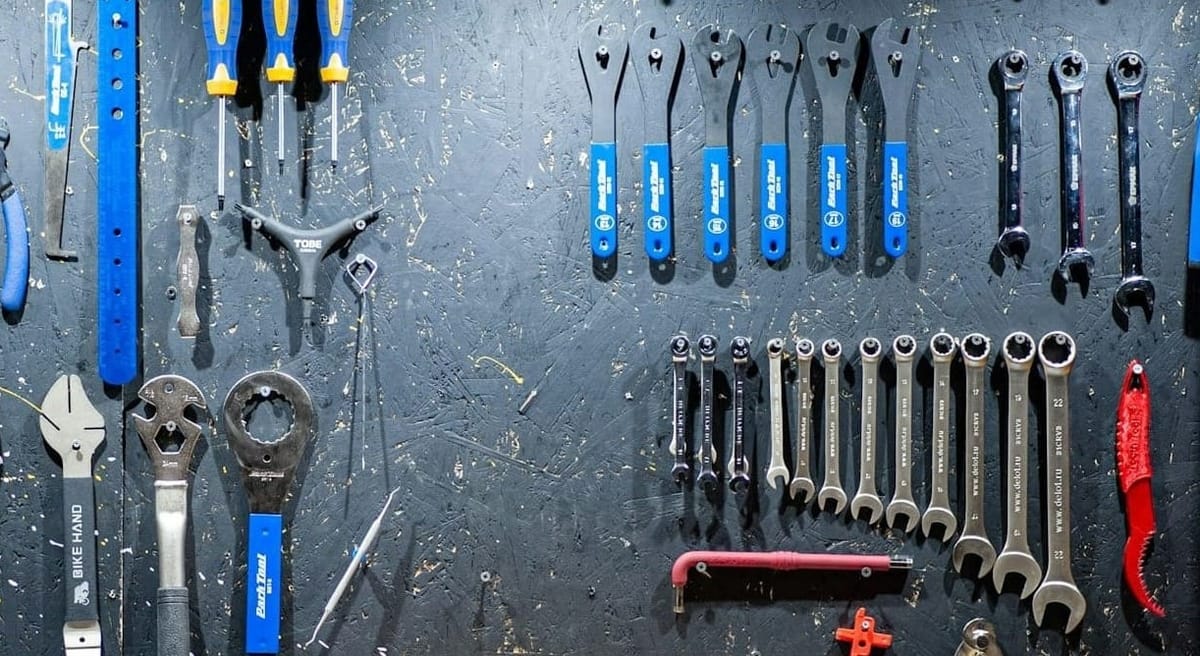
The Ottobock Repair Service Centers (the official name for the workshops) feature welding equipment, sewing machines, and vacuum chambers. There are 3D printers making spare parts and work benches overflowing with all kinds of plastic, tape, and resin.
Ottobock is a German manufacturer founded in 1919 to supply prosthetic limbs to the thousands of injured soldiers returning home from World War I. The young company couldn't possibly meet the demand by using traditional, handcrafted techniques. So, they began experimenting with mass-production and inadvertently created the modern orthopedic industry in the process. The company now has over 9,000 employees in 45 countries and earns close to $2 billion in annual sales. They also invest heavily in para sport as the "official technical service partner" of the Paralympics.
For Milano Cortina 2026, Ottobock shipped 87 pallets containing 16 tons of equipment from their headquarters in Germany to purpose-built workshops in each of the three athlete villages. This clearly takes significant resources, but it’s also not just for charity.
Ottobock views their work as a strategic investment in a group of elite athletes who are highly influential in their communities. By welding a hockey sled here, and tweaking a ski boot there, the company has built its reputation and developed deep relationships across para sport. Much like the athletes, Ottobock employees look forward to the Paralympics as a chance to demonstrate their unique skills to the world.
Quick and custom fixes
According to Peter Franzel, Ottobock’s head of global events, more than half of the competitors in Italy needed some type of repair during the games. Franzel’s group does everything from cutting and sewing spandex to adjusting complex seating and suspension systems. This year, the hot trend was turning winter hats into headbands so that athletes wouldn't overheat in the warmer-than-expected spring weather.
The multi-lingual and multi-talented crew work around the clock so that the athletes can focus on competing during the biggest week of their lives. Franzel explains:
"The athletes are training hard and they have made their goal to come here, they arrive in good shape and then one day before their event something happens to their equipment. In that case the journey cannot be over. That's why we are here. We find the solutions so they can focus on their sport."
The team even helped a French skier who visited the workshop with a broken thumb. The athlete requested a protective splint so that he could finish his events without causing more damage. The technicians took a plaster cast of the skier’s hand while holding his ski pole. Then, they created a mold and laminated it with multiple layers of carbon fibre before shaping it under vacuum pressure to create a perfect fit.
While the work on wheelchairs, bionic joints, and adaptive skis gets most of the attention, the technicians also repair everyday assistive devices, like Austin McKenzie’s personal wheelchair. Mckenzie, a wheelchair curler for Great Britain, arrived to the shop after his wheels were damaged by the airline on his flight to Milan — a common fate that all wheelchair athletes fear when traveling. After a brief pit stop at the repair center, his chair was mended and he was back on the ice. Good as new.
Sources
Broken kit, no problem: the Paralympics rapid repair lifeline
Repairs, medals, and short tights: a technical service that moves the Paralympic Winter Games